From Websites to Ecosystems: Rethinking AI Search

For years, SEO has focused on making websites easier to discover. We research keywords, organize content, improve technical performance, build authority, and measure rankings and organic traffic.
Those fundamentals still matter. Google confirms that established SEO best practices remain relevant to AI Overviews and AI Mode, as these experiences build on its existing Search ranking and quality systems.
But what happens when potential customers research products, compare brands, and narrow down their choices without visiting your website, relying instead on information AI systems gather from reviews, independent publications, and other sources?
Your Website Is Only Part of the Story
AI systems such as ChatGPT, Gemini, Perplexity, and Google's AI-powered search experiences can retrieve and combine information from multiple sources to generate answers.
Consider someone researching vacation rental management software. They might ask an AI assistant to compare platforms based on pricing, integrations, automation capabilities, and customer support. The answer may draw on product websites, independent comparisons, customer reviews, technical documentation, and industry publications.
Your website might explain your product perfectly. But what happens when other sources contain outdated information, highlight your competitors instead, or don't mention your business at all?
As AI search evolves, understanding how your business is represented beyond your own website is becoming an increasingly important part of your search strategy.
Beyond Backlinks
Backlinks have long played an important role in SEO, but AI search introduces another consideration: where and how your business is represented across third-party sources.
Imagine ChatGPT recommends three vacation rental management software platforms and cites an independent industry comparison featuring those companies. Your product offers similar capabilities, but your business isn't mentioned.
That's a potential opportunity worth investigating:
Which sources are AI systems citing when recommending competitors?
Which competitors are featured in those sources?
Where is your business missing from relevant industry comparisons and discussions?
Which publications offer credible opportunities for inclusion?
The goal isn't simply to earn another backlink. It's to strengthen your brand's presence in credible, relevant sources that potential customers may consult and AI systems may reference when generating answers.
Keyword Research Beyond Search Volume
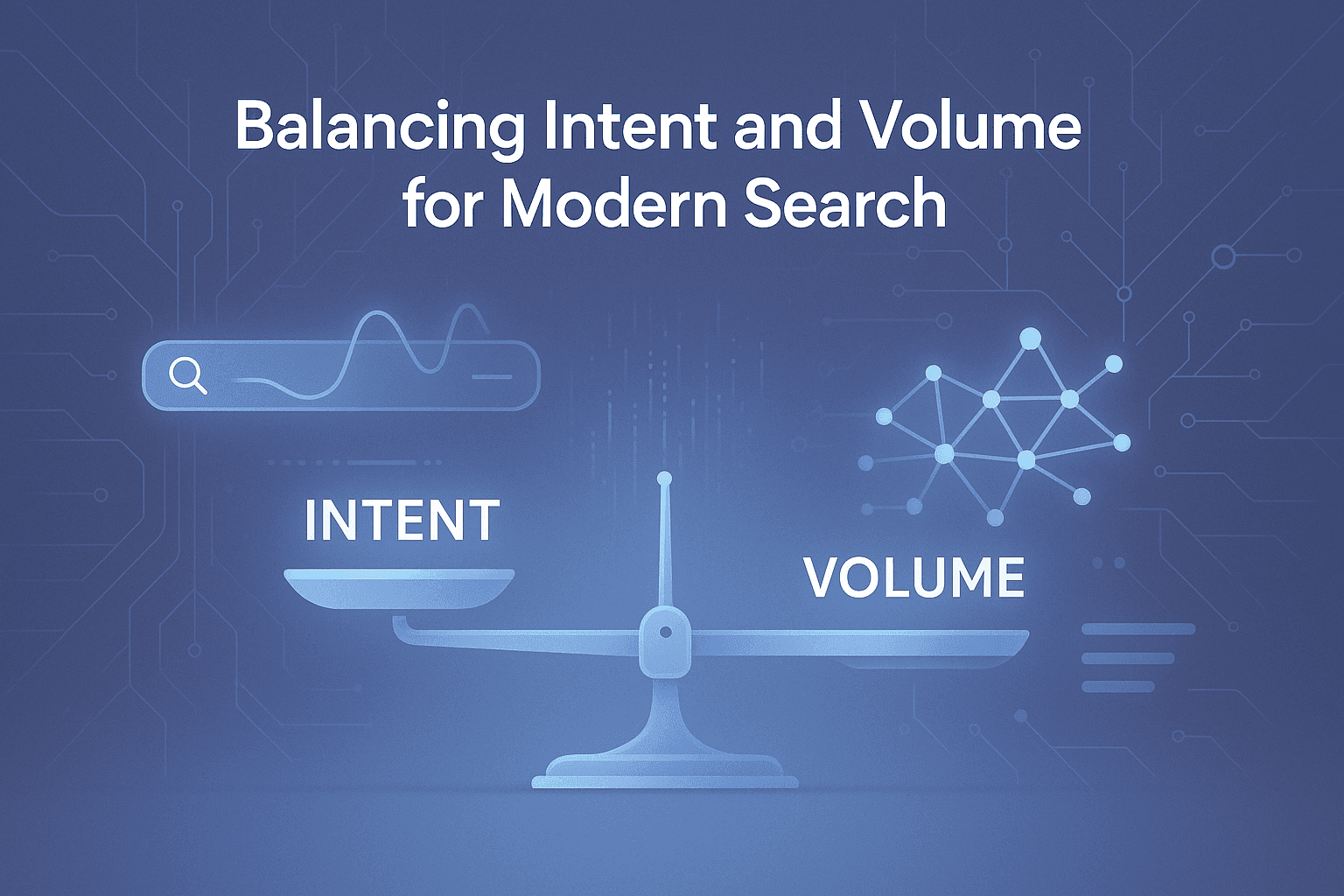
Keyword research isn't becoming obsolete, but it needs to be considered alongside a broader understanding of customer intent and information needs.
AI-powered search systems don't always treat a customer's question as a single search. One technique they use to explore related information is called query fan-out.
What Is Query Fan-Out?
Query fan-out is a technique used by AI-powered search systems to break down a user's question into multiple related searches, exploring different aspects of a topic to gather information for a more comprehensive answer. For example, someone might ask:
Which vacation rental software is best for a property manager operating 50 properties across Spain and Portugal?
An AI system could investigate several related questions:
Which platforms support multi-property operations?
What channel manager integrations are available?
Which solutions provide multilingual guest communications?
How does pricing compare for medium-sized property portfolios?
What customer support is available in European markets?
Some of these highly specific queries may have little or no measurable search volume in conventional keyword research tools. Yet the information they represent can still matter.
The opportunity isn't to create a page for every possible question but to identify the information customers need and ensure existing content addresses those needs or identify where new content is necessary.
Building Prompts Around a Buying Decision
A single buying question can involve several intents, from comparing costs to checking compatibility or assessing the risks of switching. Query fan-out shows how an AI system might explore these different intents.
When building prompts, consider which of those questions could change the buyer’s choice.
Suppose one of your priorities is reaching property managers who are considering switching platforms.
Look at search results, software reviews, and industry forums to see what comes up repeatedly. If keeping existing reservations is a common concern, test the buying decision at two levels:
Which platforms make the shortlist. “Which vacation rental platforms would you recommend for managing 50 properties across Spain and Portugal?”
Whether a specific requirement changes the recommendation. “Which platforms would you recommend if I need to keep my existing reservations when I switch?”
The second prompt helps you see which platforms are recommended when the buyer makes a requirement explicit and what evidence the answer gives for those recommendations.
Entity Optimization
Entity optimization isn't new to SEO, but AI search provides another way to evaluate how well a business and its relationships are understood and represented.
What Are Entity Relationships?
An entity can be a company, product, service, person, location, or concept. Entity modeling identifies these elements and describes how they connect.
For example, a software company might establish that:
The company offers a particular product.
The product provides specific capabilities.
Those capabilities address identifiable customer needs.
Company experts specialize in relevant topics.
Case studies demonstrate how the product is used.

These entity relationships already exist across most professional websites, through product descriptions, service pages, expert profiles, and supporting content.
What's changing with AI search is the need to examine whether AI systems correctly associate a business with its products, capabilities, and expertise when generating answers, comparing alternatives, or recommending solutions.
What Does This Mean for Your Business?
Effective entity optimization requires:
Identify key entities: Establish which companies, products, services, experts, and topics matter to the business and its customers.
Clarify entity relationships: Make connections between products, capabilities, expertise, and customer needs explicit in relevant content.
Review structured data: Check whether appropriate Schema.org types, properties, and identifiers accurately describe entities and their relationships.
Strengthen entity identification: Use consistent names, descriptions, and appropriate references to help distinguish entities from similarly named businesses or products.
Evaluate AI-generated answers: Investigate whether AI systems correctly associate the business with its products, capabilities, and expertise across relevant customer questions.
Investigate gaps: Where associations are missing or inaccurate, examine whether content, structured data, supporting evidence, or external sources need attention.
The goal is to establish clear, consistent information about the entities that matter to your business, while evaluating how accurately those relationships are reflected in AI search.
Consistent Visibility in AI Responses
AI-generated responses can vary, even when users ask the same question. Recommendations and citations may change depending on the model, location, retrieval behavior, timing, and other factors.
If your brand appears in one AI-generated answer, does that mean it has strong visibility?
Not necessarily.
A more reliable approach is to examine how consistently your business appears across repeated, comparable observations. Two factors are particularly important:
Sampling Frequency: How often are prompts tested, and under what conditions? Repeated observations help reveal variations that a single test might miss.
Historical Consistency: Does your brand maintain its presence over time, or does its visibility fluctuate significantly?
But it's not only how often visibility is measured that matters. How those measurements are collected is equally important.
AI visibility tools may use different prompts, models, locations, and measurement methods, making their scores difficult to compare. Understanding how these scores are calculated is essential for interpreting results accurately.
A single AI recommendation is an observation. Consistent visibility across a representative set of relevant prompts provides a more meaningful picture of your brand's presence in AI search.
A Smarter Approach to AI Search Optimization
As AI search becomes an increasingly important part of SEO and digital marketing strategies, professionals and businesses face a growing number of optimization recommendations, making it essential to distinguish proven practices from unsupported shortcuts.
Content templates, clear headings, concise definitions, and structured formatting can improve readability and help search engines and AI systems interpret information.
These are valuable optimization practices, but no single template or formatting technique guarantees inclusion in AI-generated answers.
AI platforms use different models, retrieval systems, and information sources, and their behavior continues to evolve.
The goal isn't to create the perfect AI-optimized page. It's to make accurate, relevant, and credible information about your business accessible wherever customers and search systems may look for it.
Business Strategy Must Come Before AI Visibility Reports
Connecting AI search analysis to commercial priorities.
AI visibility tools can generate detailed reports about prompts, competitors, brand mentions, and citations. But a sophisticated dashboard doesn't automatically translate into a meaningful business strategy.
Before deciding what to monitor, businesses need to ask:
Which products and services are most important to our commercial goals?
Which customers are we trying to reach?
Which questions and decisions influence whether customers choose us?
Which competitors are we trying to differentiate ourselves from?
What information should customers understand about our products, capabilities, and expertise?
These priorities should determine which prompts to monitor, which competitors to analyze, and which opportunities deserve attention, rather than simply tracking hundreds of prompts without a clear commercial purpose.
The value of AI search analysis isn't the volume of data collected. It's the ability to turn relevant findings into informed business decisions.
Share on LinkedIn